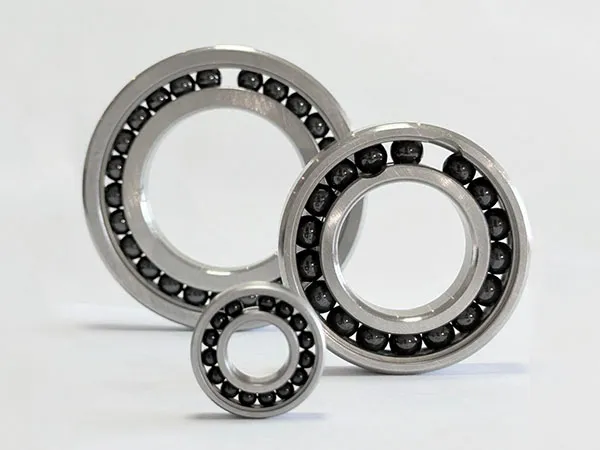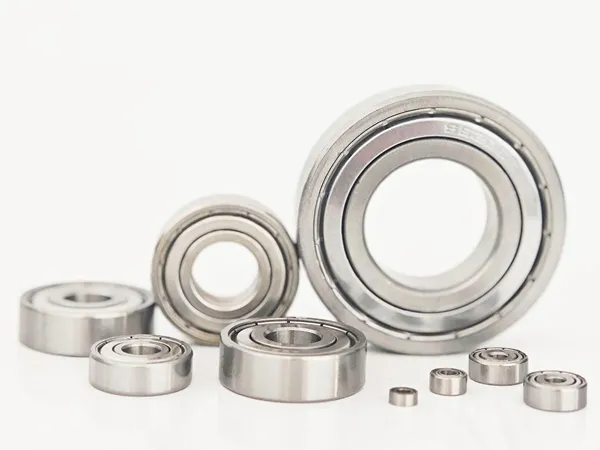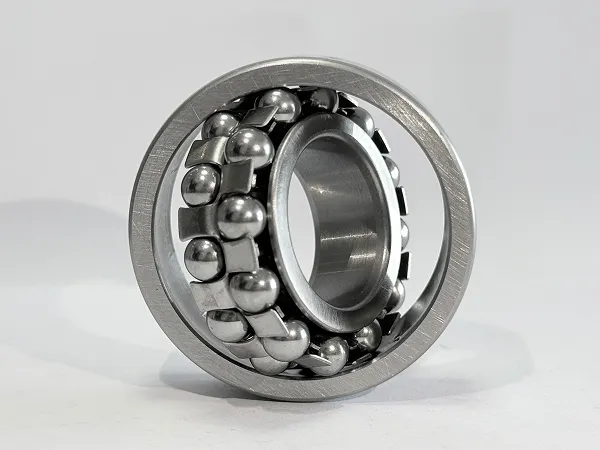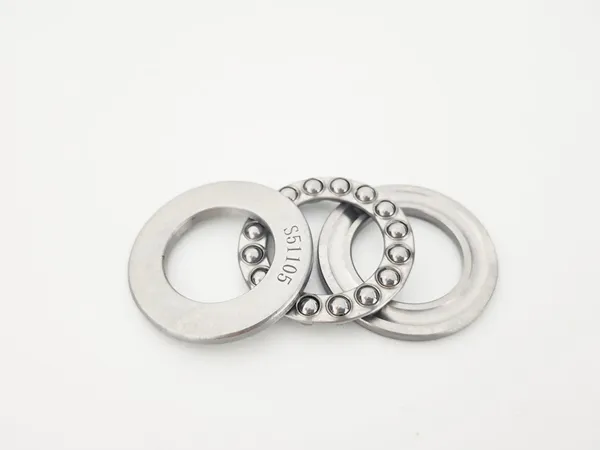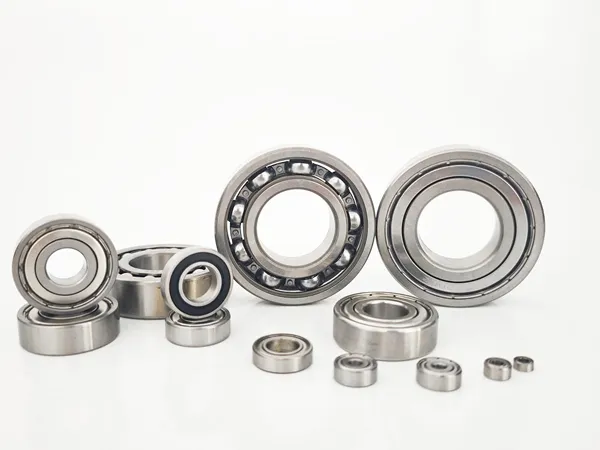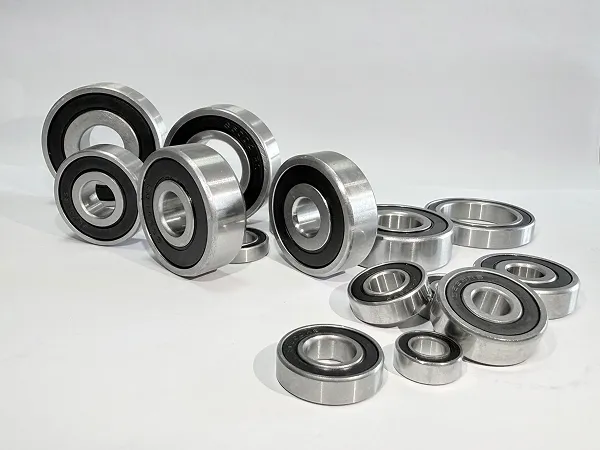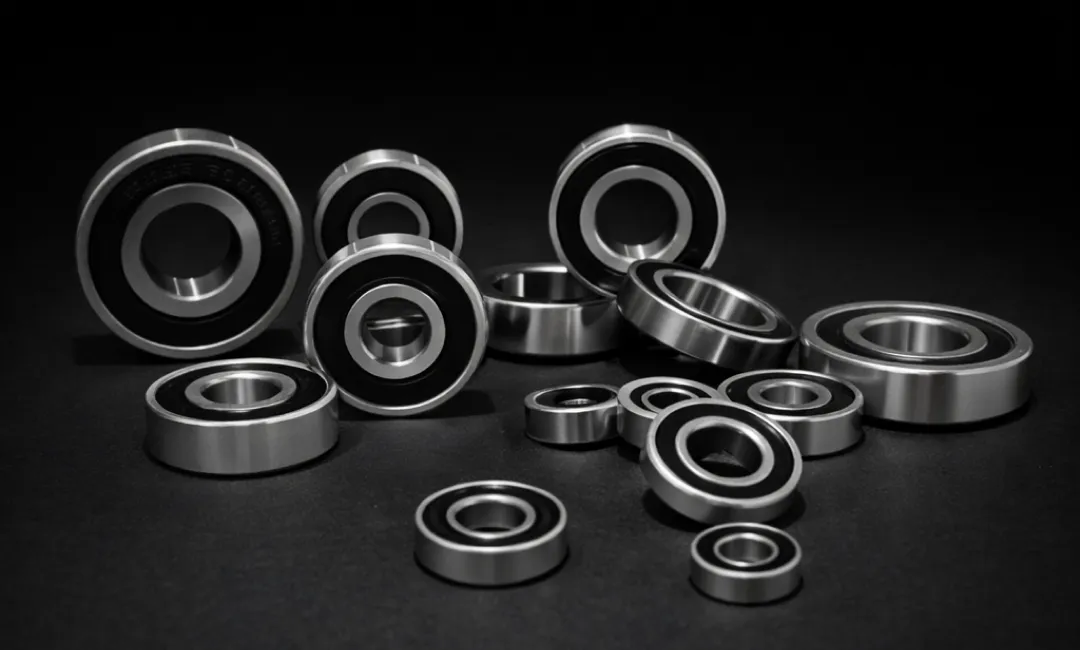
All-steel materials refer to components manufactured entirely from steel, without ceramic or polymer elements. Due to their excellent mechanical strength, durability, and cost-effectiveness, all-steel materials are widely used in heavy-duty industrial applications such as machinery manufacturing, automotive systems, construction equipment, bearings, and power transmission systems.
All-steel materials exhibit excellent tensile strength, compressive strength, and fatigue resistance. This allows them to withstand heavy loads, impact forces, and long-term cyclic stresses without deformation or failure.
Through proper alloy design and heat treatment (such as carburizing, quenching, and tempering), steel components achieve high surface hardness and improved wear resistance. This property is critical for moving parts exposed to friction, such as gears, shafts, and bearings.
All-steel materials can maintain structural stability and mechanical performance at elevated temperatures. Specialized alloy steels further enhance heat resistance, making them suitable for high-speed rotation, friction-generated heat, and demanding thermal environments.
Steel components can be machined with high dimensional accuracy and maintain stable tolerances over long periods. This is particularly important for precision machinery, bearing assemblies, and rotating systems where alignment and fit are critical.
Unlike brittle materials, all-steel structures maintain good toughness, even under sudden impact or vibration. This reduces the risk of cracking or catastrophic failure, especially in harsh industrial environments.
Manufactured from premium ZrO₂ powder
Ensures smooth surface finish and dimensional accuracy
Guarantees reliable performance and long service life
Bearings designed to meet specific industrial needs
All-steel bearings are bearings in which both the bearing rings and rolling elements are made entirely of steel, typically high-carbon chromium bearing steel or stainless steel. They are widely used in industrial applications requiring high load capacity and durability.
Standard carbon steel bearings have limited corrosion resistance and are not recommended for wet or chemically aggressive environments. For such conditions, stainless steel all-steel bearings or ceramic bearings are better options.
Yes. All-steel bearings require proper lubrication to reduce friction, minimize wear, dissipate heat, and prevent corrosion. Both grease and oil lubrication systems are commonly used depending on speed and load conditions.
Common materials include: High-carbon chromium bearing steel– high hardness and wear resistance; Stainless steel – improved corrosion resistance; The choice depends on operating environment and performance requirements.
All-steel bearings can operate at moderate to high speeds, but they generally have lower maximum speed limits than ceramic or hybrid bearings due to higher mass and friction. Proper lubrication and precision manufacturing can significantly improve high-speed performance.
With standard lubrication, all-steel bearings typically operate up to 120–150°C. Higher temperatures may be possible with special heat-resistant greases or oils, but prolonged exposure above this range can reduce bearing life.
Yes. Due to their high strength and toughness, all-steel bearings are well suited for applications involving shock loads, vibration, and fluctuating loads, such as construction and heavy machinery.
Compared with ceramic bearings, all-steel bearings: Have higher toughness and shock resistance; Are more cost-effective; Require lubrication; Offer lower corrosion resistance and lower maximum speed capability.