English
Self-Aligning Ball Bearings

Self-Aligning Ball Bearings

Home Products Self-Aligning Ball Bearings
Product
Self-Aligning Ball Bearings
High Performance Solutions from ShiBo
Discover our extensive collection of Self-Aligning Ball Bearings engineered for reliability and efficiency in diverse applications.
Get A Quote
Self-Aligning Ball Bearings
Features
Features of Self-Aligning Ball Bearings
  • Durability and Vibration Tolerance

    The bearing’s design allows it to tolerate slight vibrations and shock loads, extending service life in demanding conditions.

    01
  • Automatic Misalignment Compensation

    Self-aligning ball bearings can accommodate angular misalignment between the shaft and housing without affecting performance. This makes them ideal for applications where shaft deflection or mounting errors occur.

    02
  • High Load Capacity

    They can support moderate radial loads and limited axial loads in both directions, providing versatility in mechanical design.
    03
Self-Aligning Ball Bearings
  • 04
    Low Friction Operation

    Due to the spherical design of the outer raceway, these bearings maintain low friction even under misalignment, reducing heat generation and improving energy efficiency.

  • 05
    Reduced Maintenance Requirements

    Self-aligning bearings are more forgiving to installation errors and misalignment, leading to less frequent maintenance compared to standard ball bearings.

  • 06
    Quiet and Smooth Operation

    The dual-row design ensures smooth rotation and minimizes noise, making them suitable for applications where quiet operation is important.

Product Introduction
What Are Self-Aligning Ball Bearings?
An overview of Self-Aligning Ball Bearings, their structure, and how they function in mechanical systems.
01
Definition

Self-aligning ball bearings are rolling bearings that automatically compensate for angular misalignment between the shaft and the bearing housing. Their most significant characteristic is that they can maintain normal operation even with slight misalignment or bending between the bearing axis and the bearing housing bore centerline, thus reducing additional stress and wear. Self-aligning ball bearings are typically used to bear radial loads and can also withstand small axial loads, but their axial load capacity is relatively low.

02
Structural Features

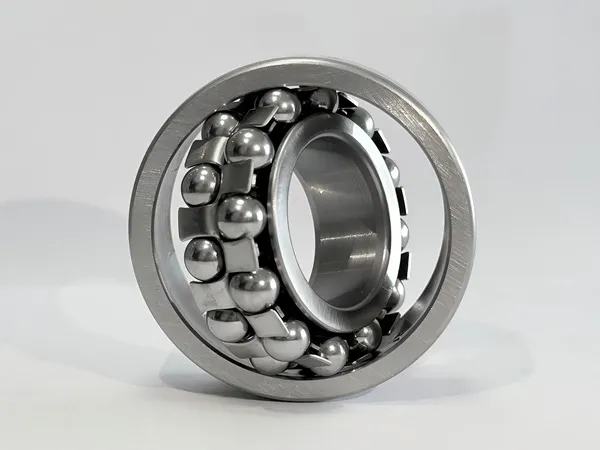
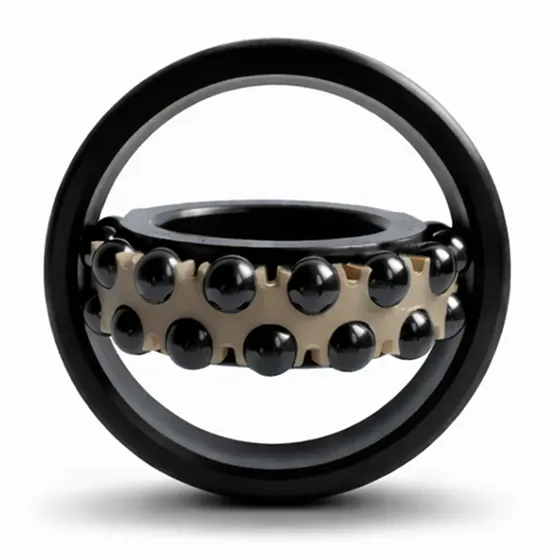
Double-row ball bearing design: The inner ring has two raceways, while the outer ring has only one spherical raceway with a spherical center. This structure allows the inner ring to rotate freely relative to the outer ring within a certain angular range, achieving automatic alignment. Outer ring spherical raceway: The outer ring raceway is spherical, with its center above the bearing centerline. When the shaft and bearing housing bore are not perfectly aligned, the inner ring automatically adjusts its position to ensure smooth rolling. Rolling elements: Steel balls are used as rolling elements, and a spacer cage evenly distributes the balls, reducing friction and wear. The large number and even distribution of rolling elements result in a more reasonable load distribution. Cage: Maintains the spacing between the balls, preventing collisions and jamming. Can be made of steel plate, copper, or nylon to meet different speed and temperature requirements.

03
Working Principle

The working principle of self-aligning ball bearings is based on the geometry of a spherical outer ring raceway and a double-row inner ring raceway: Load Transfer: Radial loads are transferred to the inner and outer rings through the rolling elements, ensuring uniform load distribution between the shaft and the bearing housing. Self-aligning Function: When the shaft or bearing housing experiences slight bending or installation misalignment, the inner ring can make a small angular adjustment relative to the outer ring. The rolling elements rotate freely on the spherical raceway, ensuring smooth rolling and reducing stress caused by eccentricity. Reduced Friction and Wear: Because the rolling elements can automatically adjust their angle, the coefficient of friction is low, resulting in a longer bearing life.

04
Typical Applications

Self-aligning ball bearings, due to their self-aligning properties, are widely used in various mechanical equipment: Agricultural Machinery: Combine harvesters, tractors, seeders, etc., to resist soil vibration and installation errors. Wind Turbines: Main bearings withstand wind load variations and slight eccentricity. Electric Motors and Pumps: Rotors and bases may have alignment errors; ensuring stable operation is crucial. Conveying Equipment: Sprockets and pulleys are prone to eccentricity; ensuring smooth operation is essential. Textile Machinery: High-speed operation requires low friction and low noise.

05
Advantages and Value

Automatically compensates for eccentricity and angular errors, reducing mechanical stress. Smooth operation and low friction extend service life. Highly adaptable, especially suitable for environments with vibration and slight eccentricity. Easy to install and maintain, reducing equipment failure and downtime.

Product
Our Self-Aligning Ball Bearings Products
Browse our wide range of Self-Aligning Ball Bearings with detailed models, specifications, and competitive prices.
Choose The Right Product
Material Selection
Application
Applications of Self-Aligning Ball Bearings
Learn about the diverse industries and machines where Self-Aligning Ball Bearings are essential components.
Get A Quote
Shibo provides customized services to users, and its products are widely recognized and praised by users.
All Products
Applications of Self-Aligning Ball Bearings Applications of Self-Aligning Ball Bearings
How To Choose
Deep Groove Ball Bearing Selection Checklist
Step 1
Parameter Confirmation

Before selecting a bearing, please confirm the following basic parameters:

Shaft Diameter (d): mm

Outer Diameter (D): mm

Width (B): mm

Tolerance Grade: P0 / P6 / P5

Bearing Model/Type: 1200, 1300, 2200, 2300 series

Seal Type: Open / ZZ / 2RS

Step 2
Working Conditions

2.1 Load Conditions

Main Load Type: Primarily radial load? Is there an axial load?

Load Magnitude (Cr, Cor): Does it meet the rated dynamic/static load?

Impact Load or Vibration Load: Yes/No

2.2 Speed ​​Requirements

Actual Operating Speed ​​(rpm)

Does it exceed the series' limiting speed?

Is it a high-speed application (e.g., motor)? Is low friction required?

2.3 Temperature Environment

Operating Temperature Range: -20°C ~ ?

Is high-temperature grease (>120°C) required?

Is there a temperature difference that could cause bearing expansion?

Step 3
Self-Regulation Ability Requirement

Self-aligning ball bearings can compensate for some installation errors, but the following must be confirmed:

Expected shaft deflection/angular deviation range (°)

Does the equipment have shaft misalignment?

Is it necessary to select a bearing with a spherical outer ring (standard self-aligning structure)?

Step 4
Installation Method

Choosing the right mounting method can improve operational stability:

Adapter Sleeve: H, HE series

Cylindrical bore / Tapered bore

Is a bearing housing required (e.g., SN, SNL series)?

Is grease lubrication or oil bath lubrication used?

Step 5
Materials and Lubrication

Material Selection

Bearing Steel GCr15 (Standard)

Stainless Steel (Corrosion-resistant environment)

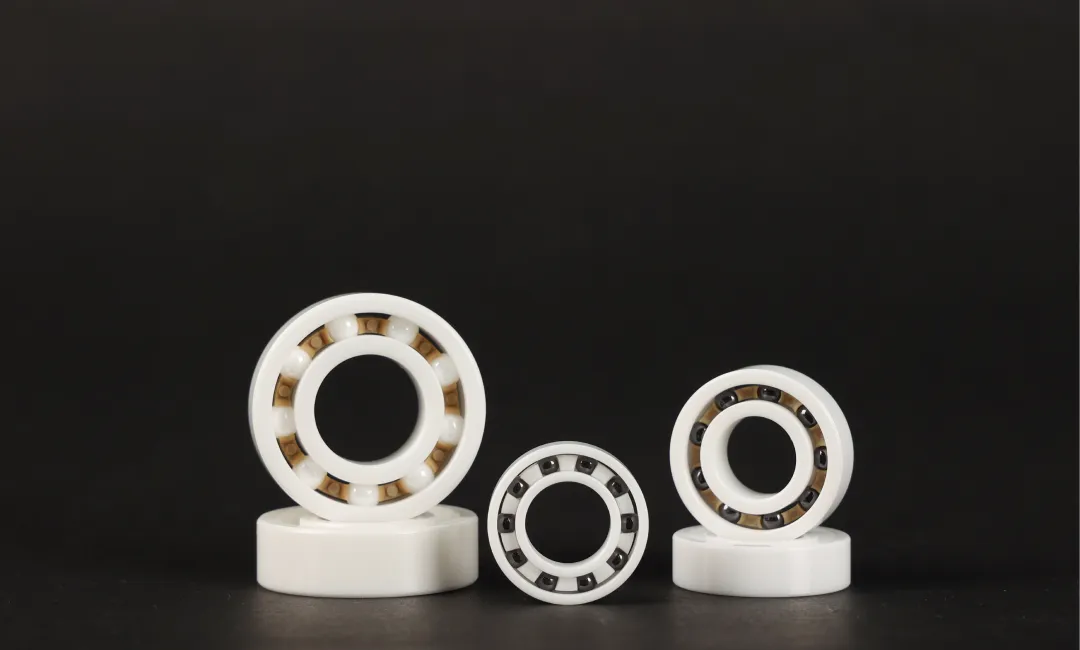
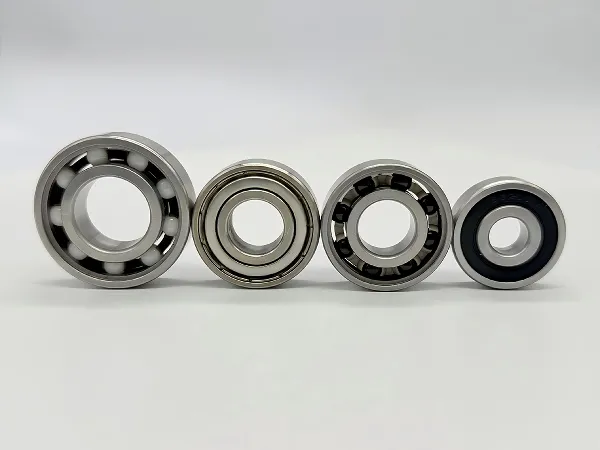
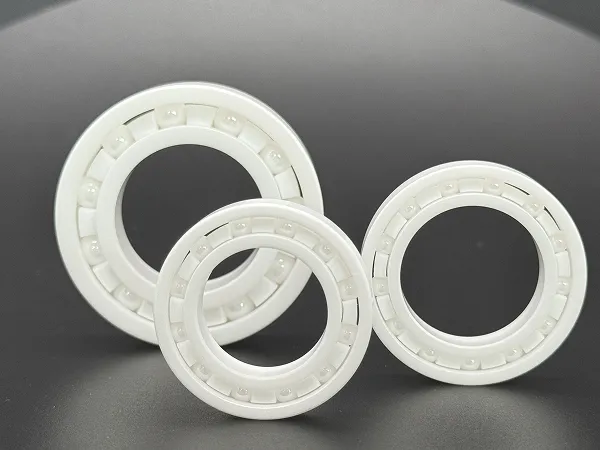
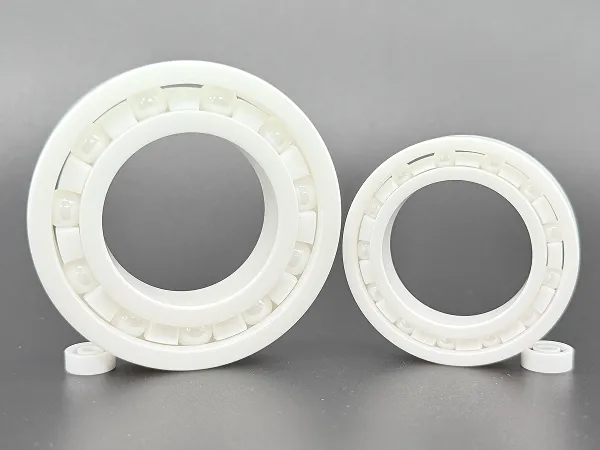
Plastic or Ceramic Cage (High-speed or Corrosion-resistant)

Lubrication Method

Standard Lithium-based Grease

High-Temperature Grease

Low-Noise Motor Grease

Food-grade Grease (NSF H1)

Step 6
Protection and Sealing

Based on the dust and humidity levels of the operating conditions, confirm:

Sealing type: Open type / ZZ dust cover / 2RS sealed cover

Is an external protective cover required?

Is rust or corrosion prevention treatment required?

Step 7
Bearing Life

Daily operating hours of the equipment

Estimated service life

Calculate whether the L10 life requirement is met

Is it necessary to select a higher load rating 22xx or 23xx series?

Step 8
Industry Applications

Please confirm whether the bearings are suitable for the operating conditions of your industry:

Fans, Blowers

Conveying Systems

Light Industrial Machinery

Motor Bearings

Agricultural Machinery

Wind Power Equipment, etc.

What Are You Looking For?
Frequently Asked Questions
What is a self-aligning ball bearing?

It is a type of rolling-element bearing that can accommodate misalignment between the shaft and the housing without increasing friction or wear. It features two rows of balls and a common concave spherical raceway in the outer ring, which allows the inner ring and balls to rotate at a slight angle relative to the outer ring.

What are the common types of self-aligning ball bearings?

Single-row self-aligning ball bearings: Can handle limited misalignment; simpler design. Double-row self-aligning ball bearings: Can handle larger misalignment and higher radial loads; most widely used.

How do I know if I need a self-aligning ball bearing?

Consider a self-aligning bearing if your application has: Shaft misalignment during operation; Deflection under load; Vibration or mounting errors that affect bearing performance.

What are the maintenance tips for self-aligning ball bearings?

Proper lubrication: Use the recommended grease or oil to reduce friction and wear. Regular inspection: Check for noise, vibration, or heat during operation. Correct mounting: Avoid forcing the bearing; use proper tools. Prevent contamination: Seal the bearing if operating in dusty or wet environments.

What materials are self-aligning ball bearings made from?

Bearing steel (Chrome steel, SAE 52100): Most common; high hardness and wear resistance. Stainless steel: For corrosion-resistant applications. Ceramic balls (optional): Lower weight, reduced friction, high-speed applications.

What are the key features of self-aligning ball bearings?

Self-correcting misalignment: Can tolerate shaft deflection or mounting errors. Low friction and smooth operation: Due to ball contact and optimized geometry. High radial load capacity: Suitable for applications with significant radial forces. Limited axial load capability: Can handle small axial loads in both directions.

Related News
Stay Updated with the Latest News
Contact Us!
We Will Reply To You Within 24 Hours
Submit Now
Contact Us!