When paired in back-to-back or face-to-face arrangements, they can support axial loads in both directions, making them ideal for machine tool spindles, gearboxes, and electric motors.
The angled contact line allows these bearings to manage combined radial and axial loads efficiently, distributing forces evenly and improving performance under demanding conditions.
Thanks to precision engineering and optimized geometry, angular contact bearings operate smoothly at high speeds with minimal friction and vibration, making them perfect for spindles, pumps, and high-speed motors.
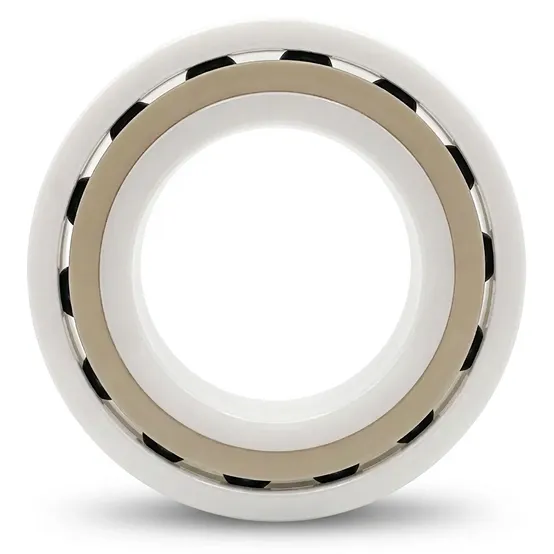
Angular contact bearings provide high stiffness and low deflection under load, ensuring accurate operation in CNC machines, robotics, and precision instruments.
Optimized rolling elements and contact angles minimize friction, lowering operating temperatures and extending the bearing’s lifespan, which reduces maintenance costs and downtime.
Available in single-row, double-row, or multi-row designs, and can be arranged in back-to-back, face-to-face, or tandem configurations, offering flexible solutions for various load and alignment requirements.

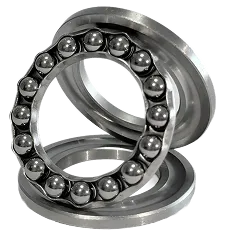
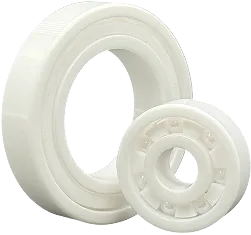
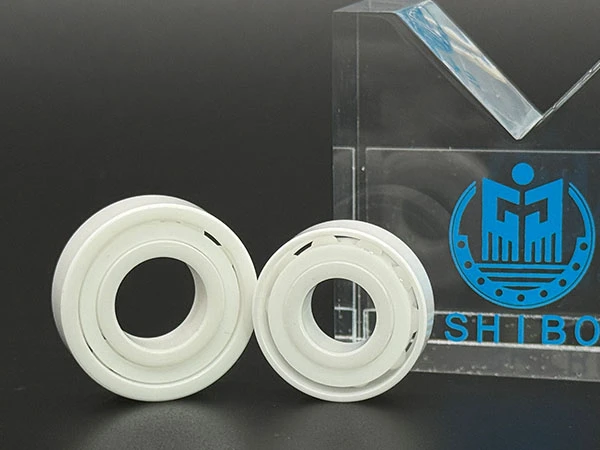
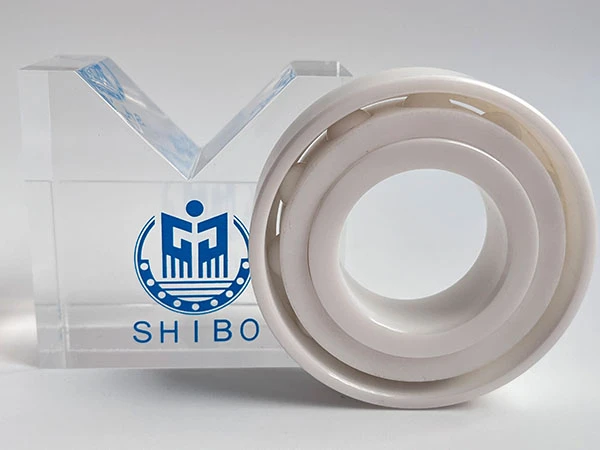
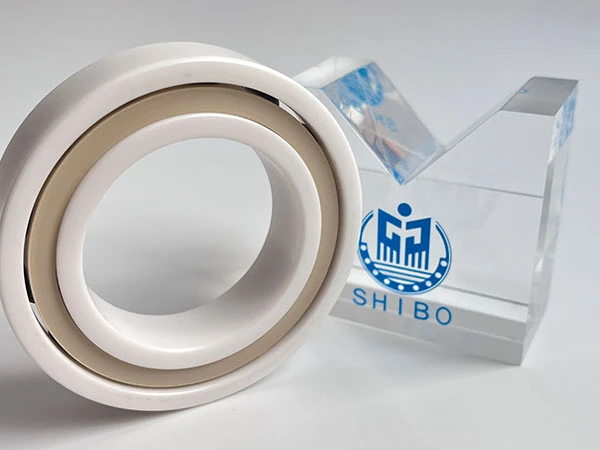
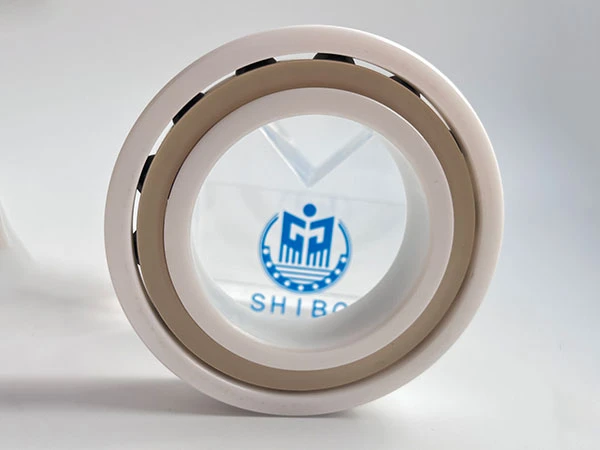
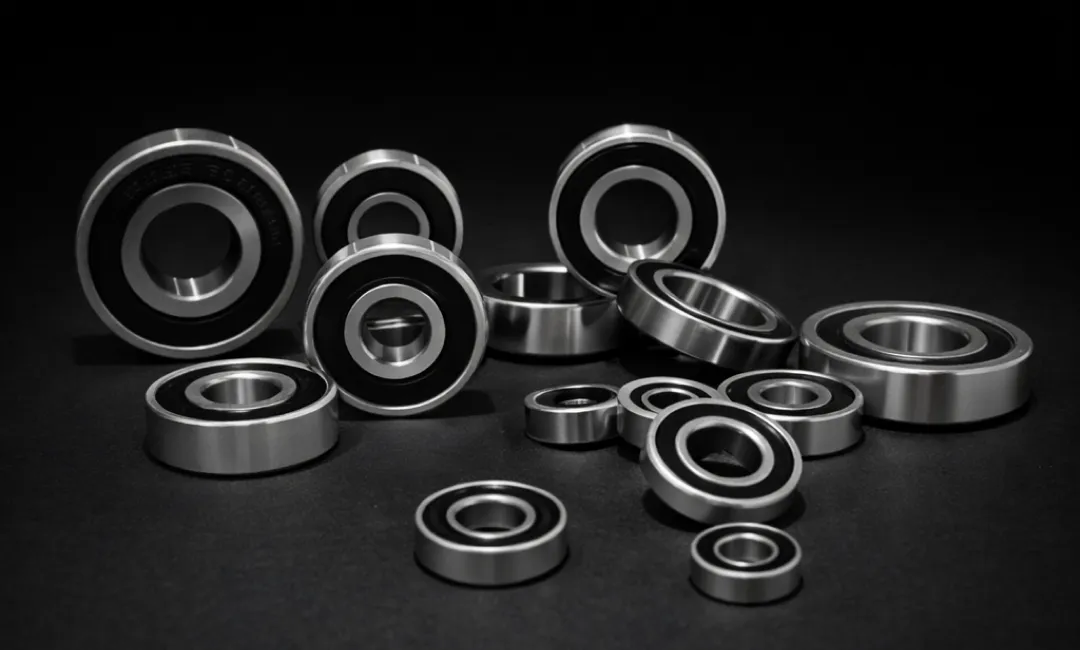
An angular contact ball bearing is a type of rolling element bearing designed to handle both radial and axial loads simultaneously. Unlike deep groove ball bearings, the load capacity depends on the contact angle, which allows it to support axial loads in one direction efficiently.
Deep Groove Ball Bearings: Primarily support radial loads, limited axial load capacity. Angular Contact Ball Bearings: Designed to handle high axial loads in one direction and moderate radial loads, thanks to the angled contact between balls and raceways. Key Factor: The contact angle (typically 15°–40°) determines axial load capacity.
Machine tools: spindles, milling machines, lathes. Pumps and compressors: where combined radial and axial loads occur. High-speed motors and generators. Robotics and precision equipment: requiring high rigidity and accuracy.
Face-to-Face (O arrangement): Axial loads in both directions, moderate rigidity. Back-to-Back (X arrangement): Axial loads in both directions, high rigidity, suitable for tilting moment loads. Tandem arrangement: Axial loads in one direction, highest load capacity in that direction.
Single-Row Angular Contact Bearings – support axial loads in one direction. Double-Row Angular Contact Bearings – can handle axial loads in both directions without pairing. Four-Point Contact Bearings – a special type that supports axial loads in both directions with a single bearing.
Correct bearing selection based on load, speed, and rigidity requirements. Accurate mounting and alignment. Proper lubrication. Regular inspection for wear, vibration, and noise.